Overview
Not all road risks come from intersections or speed zones—some are embedded in the everyday behavior of drivers at routine stops. One such example is a high-volume gas station located directly on the Hume Highway in Liverpool, NSW, where our platform flagged a subtle but recurring accident risk pattern.
Location Insight
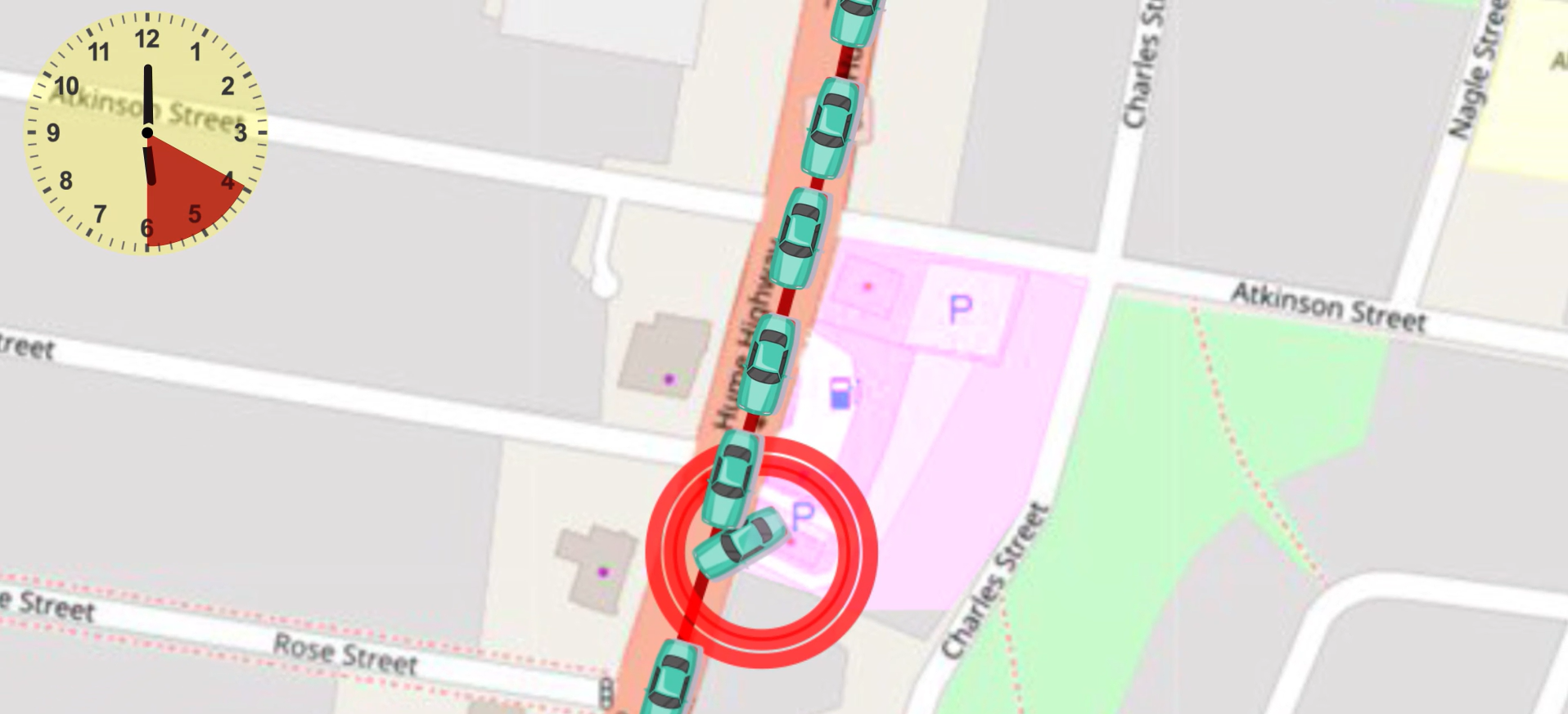
This fuel station sits alongside a major arterial highway and includes an exit lane that feeds directly into fast-moving traffic, with little to no acceleration or buffer zone. While this may appear standard in urban planning, our AI model detected a statistically significant uptick in risk levels at this very spot—especially during specific hours.
Problem Identified
Our system analyzed traffic patterns, vehicle behaviors, and historical incidents at this location. Between 4:00 PM and 6:00 PM, as both commuter traffic and fuel stop usage surge, the exit area becomes a conflict point between merging vehicles and fast-lane drivers.
Several conditions contribute to this elevated risk:
-
Sudden merging from a short exit lane
-
Reduced visibility due to parked or queuing vehicles at the station
-
Inconsistent driver behavior after refueling (e.g., distracted, hesitant, or rushing)
-
High density of vehicles during post-school and post-work rush hours
What Makes It Dangerous
What makes this risk particularly concerning is that it would be overlooked in traditional road safety audits. There’s no sharp curve, no major intersection—yet the cumulative effect of behavior and geometry results in a hotspot for minor crashes and near-misses.
How Our Technology Helps
Using Carcident’s AI-powered analytics, we detect such risks early—before they become chronic problems. Our system combines:
-
Real-time traffic behavior simulation
-
Spatial risk heat mapping
-
Historical incident overlays
-
Time-sensitive pattern recognition
This enables us to flag risks dynamically, offering data-backed recommendations for interventions like extended merge lanes, better signage, or adjusted traffic flow designs.
Impact & Value
For councils, transport departments, and infrastructure partners, insights like these mean the difference between reactive fixes and proactive safety improvements. By identifying hidden hotspots at commercial access points, we help reduce collisions, save costs, and improve public trust in road safety planning.